
For more than a decade, SEO (Search Engine Optimization) has been the default growth channel for digital businesses. Rank higher, get more clicks, generate more leads.
But the way people search — and make decisions — has changed.
Today, more buyers start with AI-powered answer engines such as:
- ChatGPT
- Google Gemini
- Perplexity
- Microsoft Copilot
Instead of scrolling through search results, users ask complex questions and receive one synthesized answer.
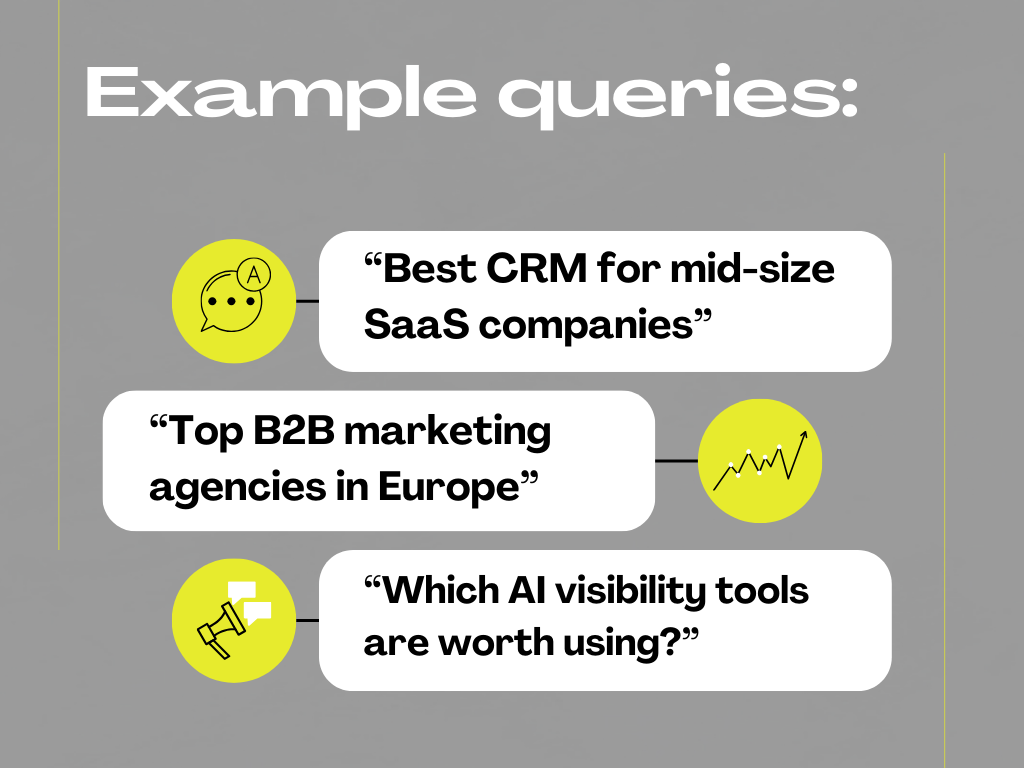
And instead of ten blue links, users receive a summarized recommendation.
This shift introduces two new optimisation layers:
- AEO (Answer Engine Optimization)
- GEO (Generative Engine Optimization)
Understanding how these interact with SEO is critical if you care about revenue — not just traffic.
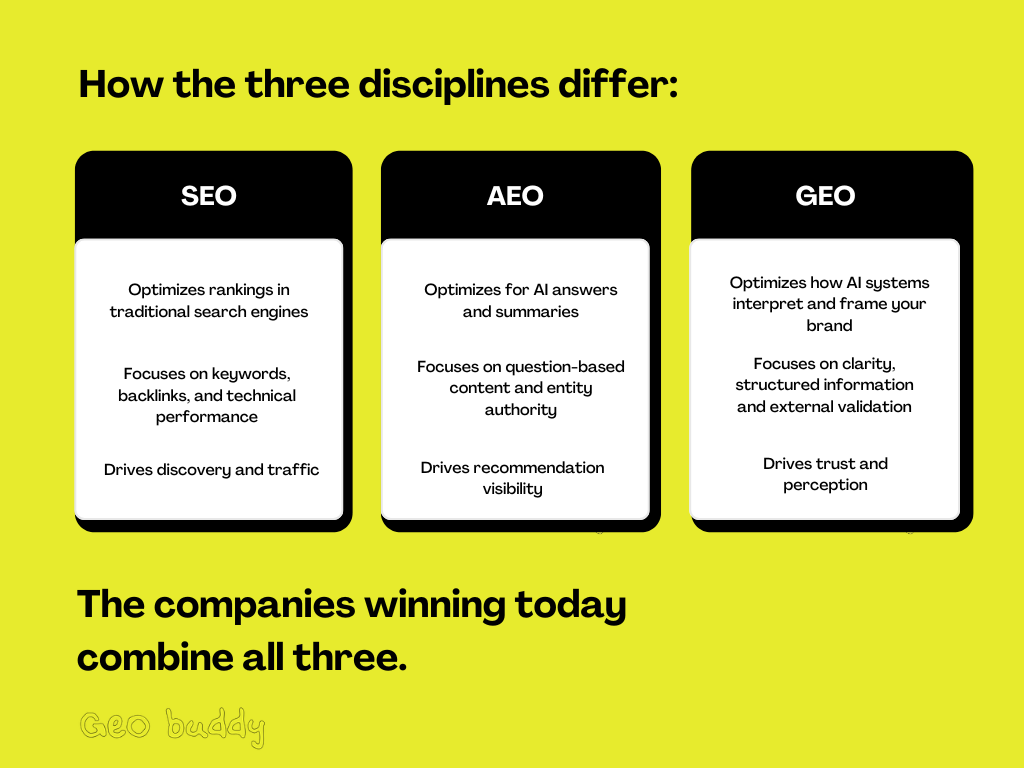
The companies winning today combine all three.
SEO: Visibility through rankings
Search Engine Optimization (SEO) helps websites rank in search engines such as Google or Bing.
SEO improves:
- keyword rankings
- organic traffic
- domain authority
- discoverability
SEO remains essential. In fact, Ahrefs research shows that over 68% of online experiences still begin with a search engine.
However, SEO primarily optimizes for discovery, not decision-making.
When AI summaries appear above search results (such as Google AI Overviews), users may never click the top result.
A high ranking does not guarantee:
- trust
- recommendation
- inclusion in AI-generated answers
AEO: Visibility through answers
Answer Engine Optimization (AEO) focuses on making your brand appear inside AI-generated answers.
Definition
AEO is the practice of structuring content so that AI systems can retrieve, interpret, and cite it when answering user questions.
AI systems typically use Retrieval-Augmented Generation (RAG).
RAG means an AI model:
- retrieves relevant external sources
- evaluates trusted information
- synthesizes a response
Rather than ranking one page, AI systems identify consensus answers across sources.
What improves AEO visibility
Content that performs well in AI answers typically includes:
- direct answers to questions
- structured headings and Q&A sections
- consistent entity mentions
- citations across multiple websites
- clear expertise signals
Research from Seer Interactive and HubSpot shows that question-led content is significantly more likely to appear in AI responses than keyword-optimized landing pages.
Practical AEO example
Instead of publishing:
“CRM software features”
Create pages like:
- “Is this CRM suitable for remote teams?”
- “How does this CRM compare to HubSpot?”
- “What are the limitations of this CRM?”
Each question becomes a potential AI citation entry point.
GEO: Visibility through perception
Generative Engine Optimization (GEO) goes beyond answers.
It focuses on how AI systems understand and describe your brand across conversations.
Definition
GEO optimizes how generative AI systems:
- interpret your business
- describe your positioning
- compare you with competitors
- recommend you for specific use cases
In AI-driven discovery, perception becomes distribution.
If AI describes your company incorrectly — or not at all — potential buyers may never consider you.
Key GEO factors
AI systems evaluate signals such as:
- brand mentions across multiple sources
- structured data and entity clarity
- product descriptions and use-cases
- consistency between website, reviews, and documentation
- external validation (forums, blogs, videos)
Studies from Ahrefs and Awario indicate that brand mentions — even without backlinks — increasingly influence AI discovery.
GeoBuddy insight: AI visibility gaps
Across AI visibility audits conducted by GeoBuddy, several patterns appear consistently:
- AI tools frequently cite outdated or secondary sources
- help documentation often outranks marketing pages
- inconsistent messaging leads to incorrect AI summaries
- small structural changes can dramatically improve AI mentions
This suggests that AI visibility is often a structural problem, not a content volume problem.
Which one actually drives revenue?
The highest-performing companies do not choose between SEO, AEO, and GEO.
They stack them.
Why AI traffic often converts better
Early industry data shows that AI-driven traffic often converts better than traditional search traffic.
Reasons include:
Higher intent
Users asking AI tools usually perform several follow-up questions first.
Built-in trust
Being presented as an answer carries more authority than a ranked link.
Lower competition
AI answers often mention only 3–5 brands.
Research highlights:
- Adobe Digital Insights: AI-driven referral traffic increased more than 10× year-over-year in the US.
- Seer Interactive: B2B visitors arriving from AI tools convert at higher rates than typical organic search traffic.
- Microsoft Clarity: AI-referred users demonstrate stronger engagement and lower bounce rates.
How to start optimizing today
Companies wanting to improve AI visibility should begin with five actions:
1. Turn keywords into questions
Use:
- sales conversations
- support tickets
- community forums
- paid search data
to identify real questions buyers ask.
2. Build topic hubs
Instead of isolated blog posts:
Create structured content clusters that cover:
- comparisons
- use cases
- limitations
- FAQs
AI systems retrieve complete topical coverage more easily.
3. Strengthen help documentation
Help centres and FAQs often contain the exact phrasing users use in AI prompts.
Best practices:
- keep documentation on your main domain
- expand Q&A sections
- add real-world examples
4. Earn off-site mentions
AI models frequently retrieve information from:
- YouTube transcripts
- niche blogs
- comparison articles
- product reviews
Authentic participation often works better than large-scale link building.
5. Track “Share of Answer”
Instead of only measuring rankings, track:
- how often AI mentions your brand
- which competitors appear alongside you
- which sources AI uses to describe your company
This is the AI-era equivalent of keyword rankings.
Final takeaway
SEO is not disappearing.
But search is no longer the entire discovery layer.
In 2026 and beyond:
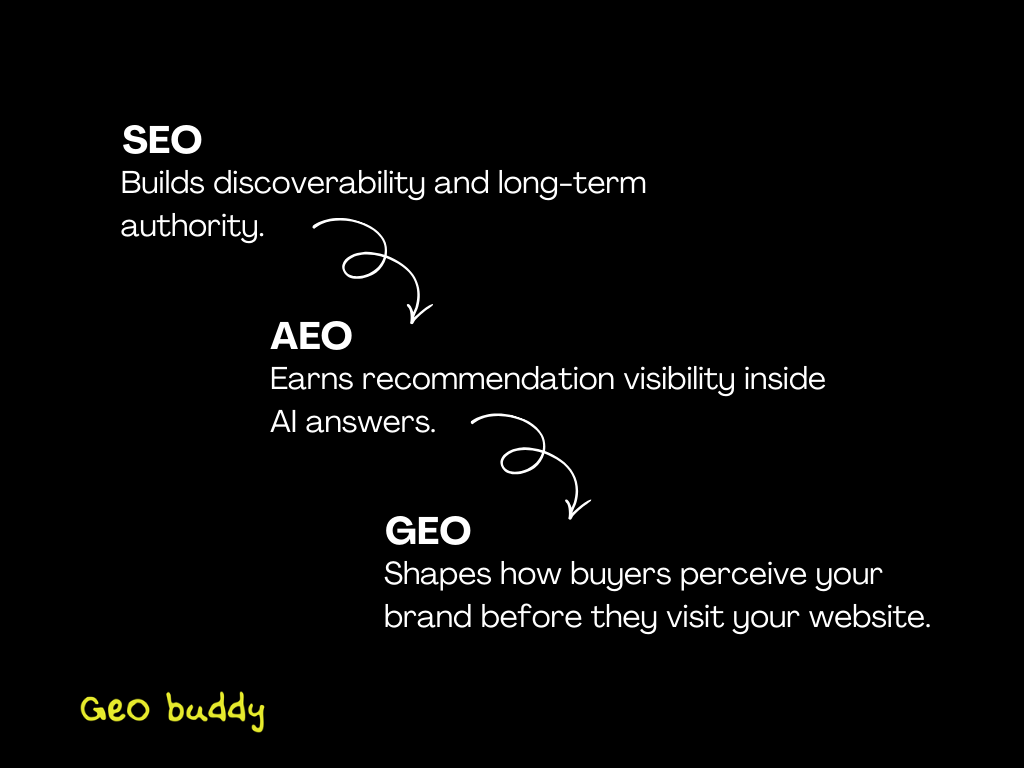
- SEO drives discovery
- AEO earns recommendations
- GEO shapes perception
The companies that combine all three will dominate AI-driven discovery.
Because in the AI era, the goal is no longer just to rank.
The goal is to be the answer.
Author
This article was written by the team behind GeoBuddy, an AI visibility and search optimisation platform helping B2B companies understand and improve how they appear in AI-generated answers.
GeoBuddy helps companies:
- audit AI visibility
- identify citation gaps
- optimize content for AI discovery
- track “Share of Answer” over time.